NGOs Welcome European Commission Decision to Stick With Common Fisheries Policy in 2027 Workplan, Urging Attention on Full Implementation

CCB • November 5, 2026

Brussels, 4 November 2026: Environmental NGOs welcome the European Commission’s decision to not include a revision of the Common Fisheries Policy (CFP) in its 2027 Workplan, announced today, and call on the Commission to maintain this course.


To improve ocean health and biodiversity, BirdLife, BLOOM, Coalition Clean Baltic, ClientEarth, Environmental Justice Foundation, Oceana, and Seas At Risk urge the Commission to prioritise full implementation and enforcement of the existing CFP to rebuild fish populations, protect marine ecosystems, and secure a sustainable future for fishers and coastal communities.


“The Commission has rightly chosen to follow the findings of its own CFP evaluation, published in April this year, and to focus on holding Member States accountable for implementing the law”, said the NGOs. “Reopening a policy that has not yet reached its full potential would halt timely implementation, waste valuable time and delay the meaningful action that European fishers and marine ecosystems urgently need.”


A competitive and resilient fisheries sector can only be built on: healthy fish populations; a system that gives a fair share of space and resources to fishers that have a low impact on the marine ecosystem; and a fleet that is enabled to make a just transition to lower environmental impact, reducing dependence on subsidised fossil fuels, and responding properly to the climate crisis.


The CFP outlines a precautionary pathway forward, centering fisheries management on scientific advice and ecosystem protection, minimising the impact of fishing on the marine environment while aiming to provide a sustainably sourced food source for people throughout Europe.


“The European Commission must now demonstrate its political ambition by delivering on the CFP, which will allow fish populations to recover, will help achieve food security, along with the wellbeing of European fishers and coastal communities, and protect ocean health”, said the NGOs. “With imminent annual fisheries negotiations between the Commission, Member States and third countries, including the UK and Norway, this will be a key opportunity to finally close a major CFP implementation gap by setting fishing limits that are geared towards rebuilding struggling fish populations and fisheries.”


The environmental NGOs call on member states to cooperate with the European Commission on stronger implementation measures to fulfil the objectives of the CFP, and put European citizens and environment at the heart of their position going forward.
By CCB • November 13, 2026
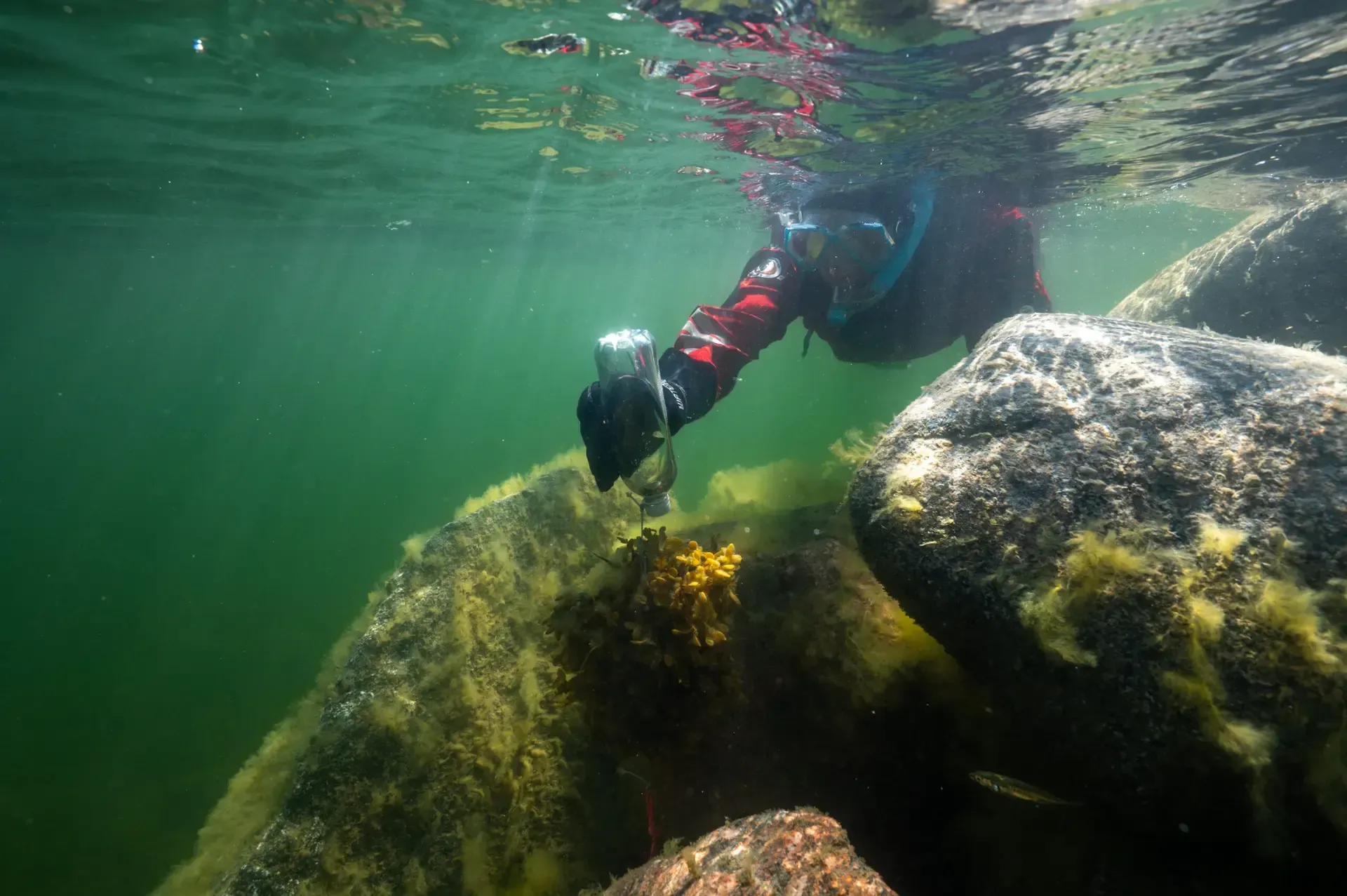
From dam removals in Finland to eelgrass returning in the Stockholm archipelago, restoration in the Baltic Sea is already under way. At a side event alongside the HELCOM Ministerial Meeting in Warsaw on 4 November, WWF and Coalition Clean Baltic (CCB) brought together government officials, farmers, volunteers and civil-society youth representatives to discuss how these local successes can turn into recovery of the entire Baltic Sea region. The event, “Restoring the Baltic Sea: From Local Successes to Regional Recovery” , took place on the same day that ministers ended their meeting without a Ministerial Declaration – leaving the HELCOM Regional Action Plan for Benthic Habitat Restoration unadopted. WWF and CCB hope the plan will be adopted in spring 2027. The event showed why it matters. Opening the event, Mirosław Proppé, CEO of WWF Poland , pointed to WWF’s latest Living Planet Report , which shows that wildlife populations continue to decline, including in the ocean. In our sea, Baltic cod is a stark example of a depleted population. But the report also offers hope: where countries and stakeholders act together, nature can recover, as the comeback of bluefin tuna shows. The Baltic Sea already has strong foundations for the same in decades of regional cooperation through HELCOM and new EU legal requirements to restore nature. Patrick Child, Deputy Director-General for DG Environment at the European Commission , built on this in his keynote. He described restoring the Baltic Sea as a regional necessity rather than a local ambition, and stressed that it requires cooperation between different authorities – which is exactly where HELCOM provides added value. Additionally, he emphasized that we must move away from isolated action and fragmented recovery towards regional measures, enabling genuine recovery of the sea.
By CCB • November 6, 2026
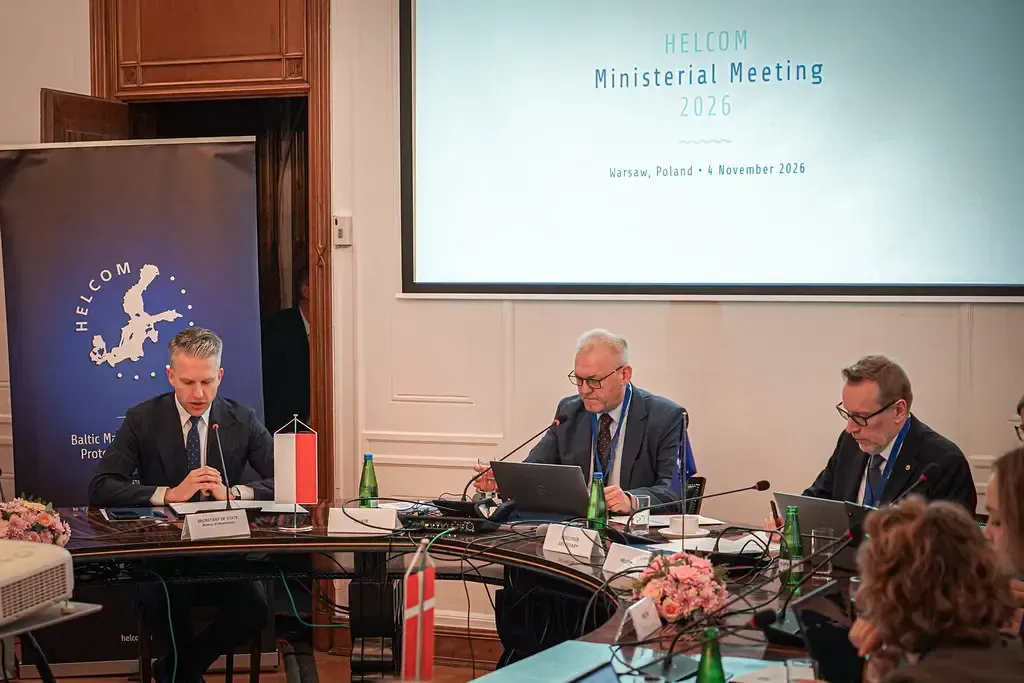
Nearly 20 years after Baltic Sea countries first agreed in Poland on a plan to save a degrading Baltic Sea, ministers met on Wednesday in Warsaw for the 2026 HELCOM Ministerial Meeting. At the halfway point of the 2021 Baltic Sea Action Plan (BSAP) [1] most actions remain only partially accomplished, and the Baltic Sea is still in a poor state [2] . WWF and Coalition Clean Baltic (CCB) are deeply disappointed that the meeting concluded without the adoption of a Ministerial Declaration. Without a clear acceleration in implementation, the 2030 targets risk being missed – just as many of the 2021 targets were. While ministers voiced their support for continued regional cooperation through HELCOM, regional agreements only help the sea once countries carry them out – and every country must play its part. The meeting reviewed progress in implementing the BSAP’s 199 actions but concluded without adoption of the anticipated Warsaw Ministerial Declaration. A ministerial declaration would have provided an important political signal on how countries intend to accelerate implementation of the BSAP and shape regional cooperation beyond 2030 [3]. The absence of a declaration makes delivery of existing commitments even more important. Commitments must be matched by action The first Baltic Sea Action Plan was adopted in Kraków in November 2007, with the goal of a healthy Baltic Sea by 2021. That goal was not reached: by 2021, only around a quarter of the plan’s national actions had been implemented by all countries [4]. Half-way through the implementation of the updated action plan – the 2021 BSAP, the majority of actions are still only partially accomplished [5]. With just over four years left until 2030, the region is on track to repeat history. Most BSAP actions are carried out nationally, and the responsibility for delivering them lies with each Contracting Party. Warsaw must not become another stop on the same road – this time, commitments must be matched by delivery. Strengthening the implementation of the BSAP is a priority of the new Polish presidency of HELCOM [6].