WWF and CCB spotlight pathways to restore the Baltic Sea at HELCOM Ministerial Meeting
CCB • November 13, 2026

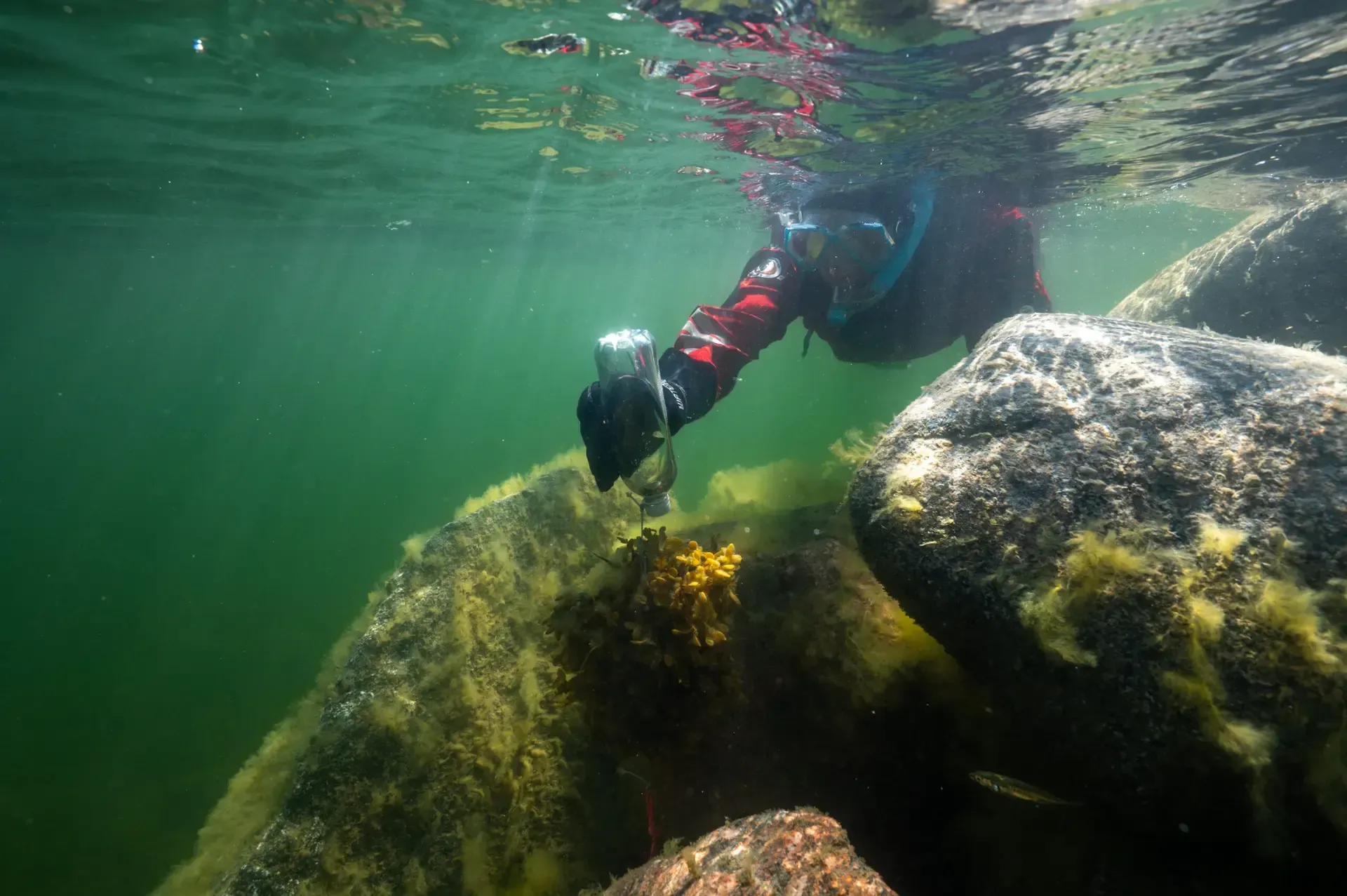
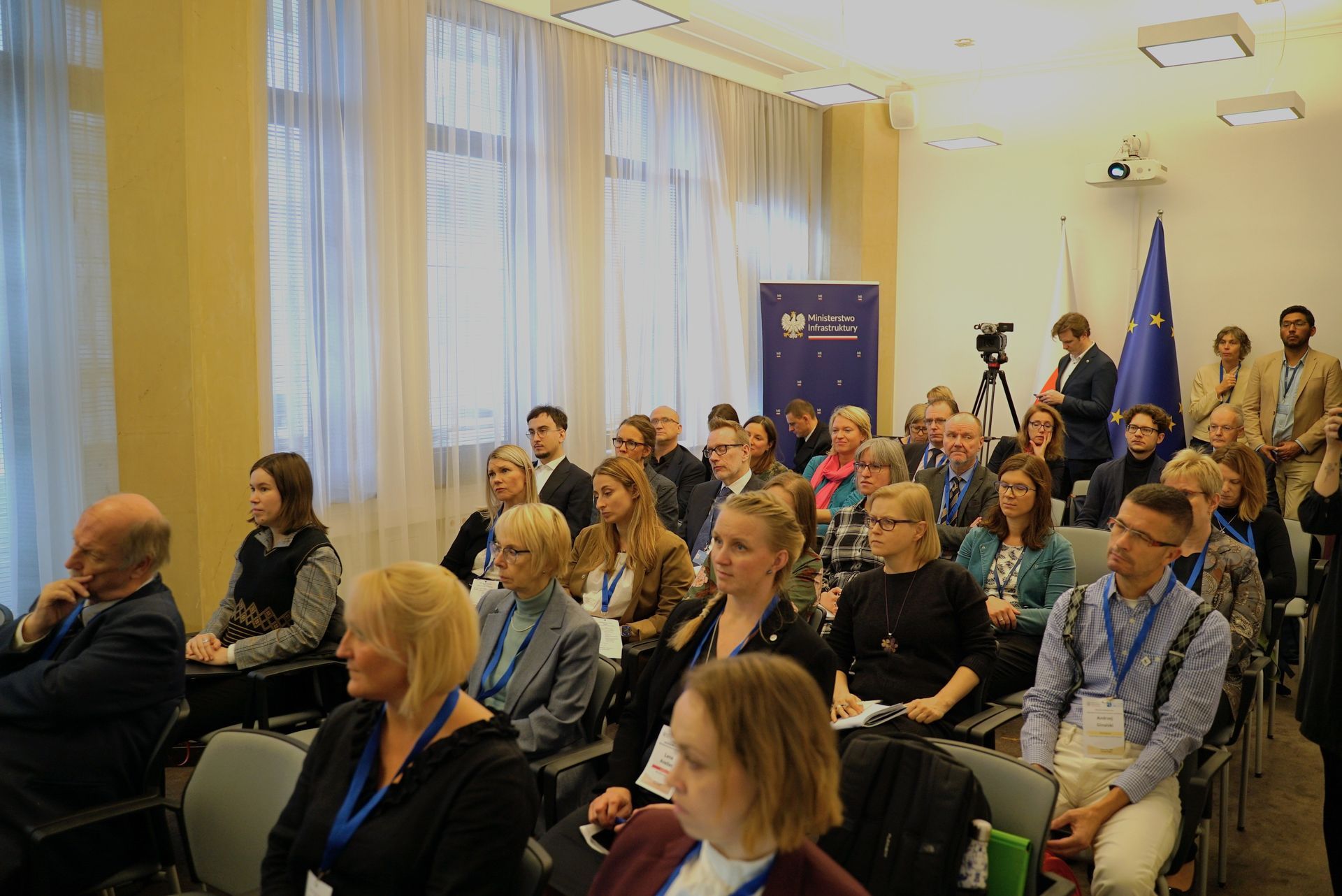
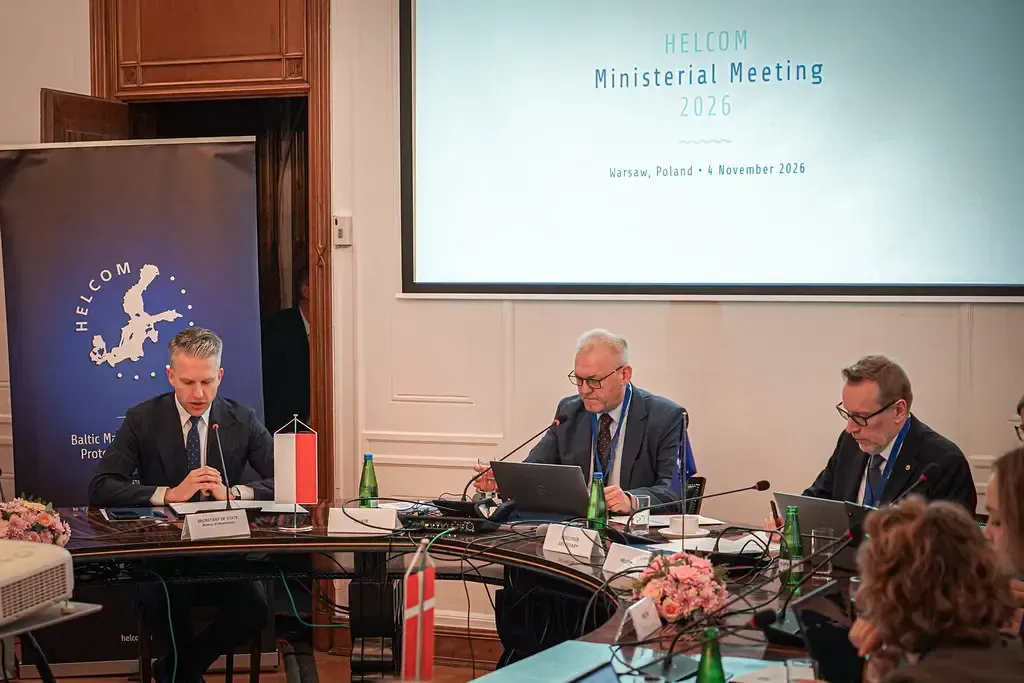
From dam removals in Finland to eelgrass returning in the Stockholm archipelago, restoration in the Baltic Sea is already under way. At a side event alongside the HELCOM Ministerial Meeting in Warsaw on 4 November, WWF and Coalition Clean Baltic (CCB) brought together government officials, farmers, volunteers and civil-society youth representatives to discuss how these local successes can turn into recovery of the entire Baltic Sea region.


The event,
“Restoring the Baltic Sea: From Local Successes to Regional Recovery”, took place on the same day that ministers ended their meeting without a Ministerial Declaration – leaving the HELCOM Regional Action Plan for Benthic Habitat Restoration unadopted. WWF and CCB hope the plan will be adopted in spring 2027. The event showed why it matters.

Opening the event,
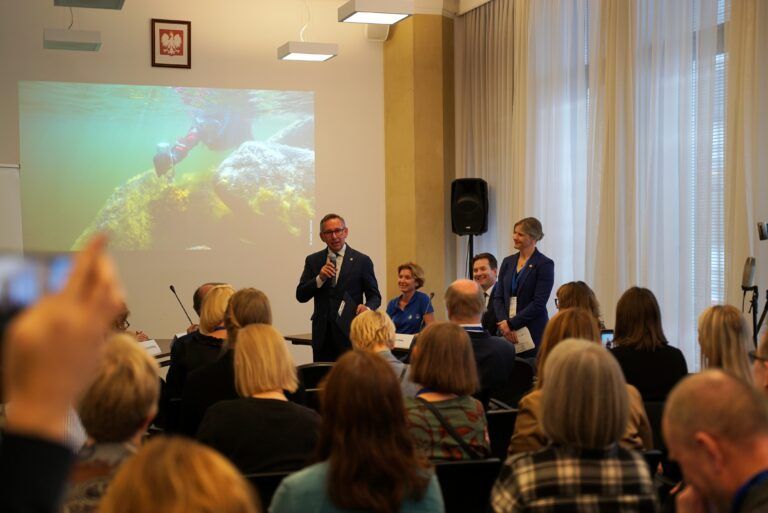
Mirosław Proppé, CEO of WWF Poland, pointed to WWF’s latest Living Planet Report, which shows that wildlife populations continue to decline, including in the ocean. In our sea, Baltic cod is a stark example of a depleted population. But the report also offers hope: where countries and stakeholders act together, nature can recover, as the comeback of bluefin tuna shows. The Baltic Sea already has strong foundations for the same in decades of regional cooperation through HELCOM and new EU legal requirements to restore nature. Patrick Child, Deputy Director-General for DG Environment at the European Commission, built on this in his keynote. He described restoring the Baltic Sea as a regional necessity rather than a local ambition, and stressed that it requires cooperation between different authorities – which is exactly where HELCOM provides added value. Additionally, he emphasized that we must move away from isolated action and fragmented recovery towards regional measures, enabling genuine recovery of the sea.
Where restoration stands


Valeska Diemel, Working Area Leader Biodiversity at CCB, celebrated real progress, from lower nutrient runoff to new marine protected areas, but stressed that the Baltic Sea remains in a critical state. CCB’s Shadow Restoration Plan for the Baltic Sea finds that HELCOM’s Regional Action Plan is strong on coordinating and enabling actions but contains no concrete restoration actions. As restoration ultimately happens at national level, she emphasized that it will be up to each country to use the Action Plan to improve their own National Restoration Plans to lead to real, lasting change.


Johanna Fox, Programme Director of the WWF Baltic Sea Programme, presented WWF’s preliminary analysis of draft National Restoration Plans in the Baltic Sea region. The drafts take a source-to-sea approach and focus strongly on passive restoration, but treat today’s degraded sea as the baseline, lack in active restoration measures, monitoring and budgets, and show little regional cooperation. Once adopted, the HELCOM Regional Action Plan can help close these gaps through shared mapping, joint funding and coordinated priorities across borders.

The presentation also showcased restoration already delivering results, such as dam removals in Finland, guiding river restoration in Poland, and restoring grey dunes in Latvia and Lithuania.
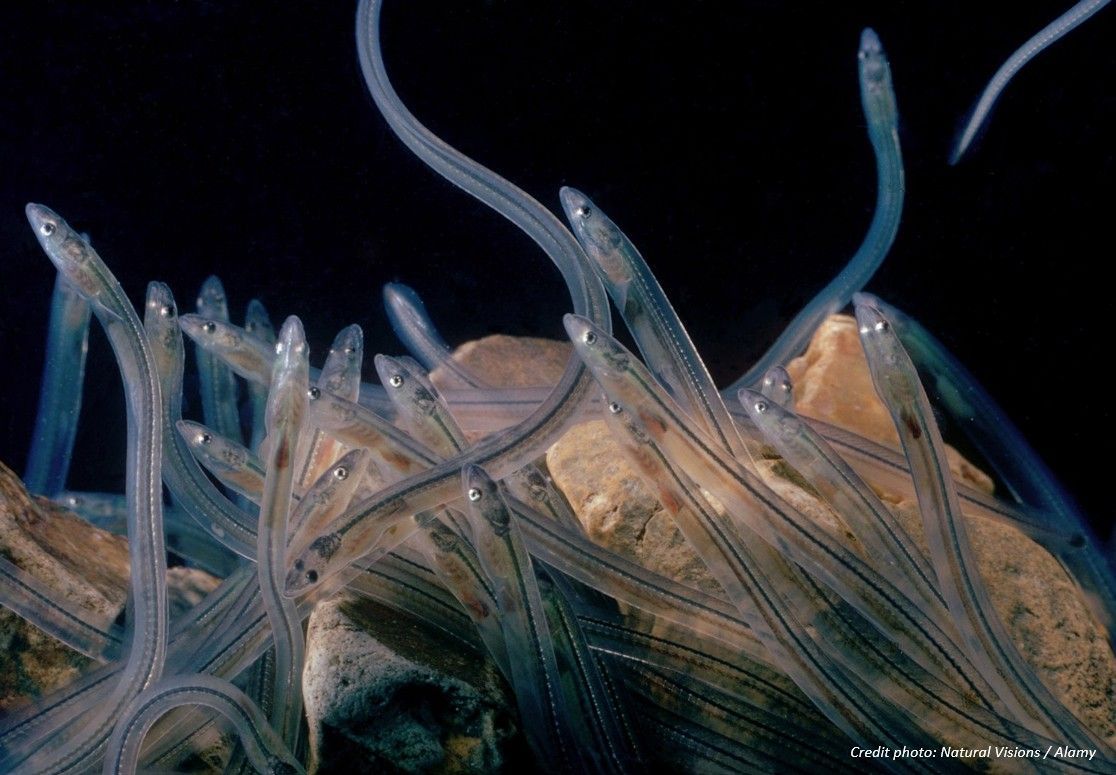
Voices from the ground


The panel brought together a range of practical perspectives to answer: ‘What does it take to turn local efforts, on land and at sea, into recovery of the whole Baltic Sea?’. 

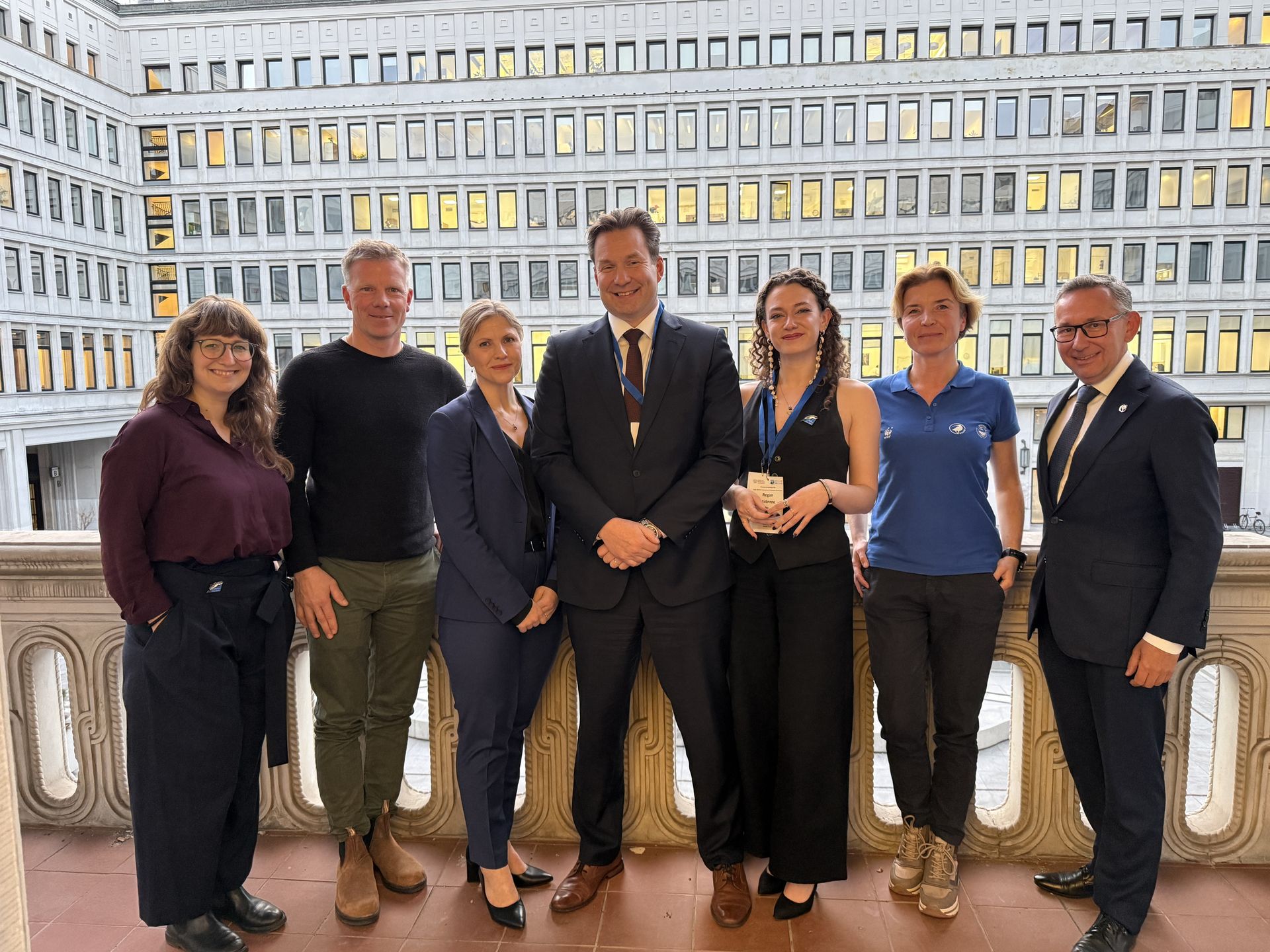
The panel included Agnieszka Machalica (volunteer for WWF Poland Blue Patrol), Regan McEnroe (Co-Chair of CCB and Chair of Nature and Youth Sweden), Christian Rohlfing (Managing Director of Gut Bad Sülze GmbH and CR LAWI GmbH &Co KG, WWF Baltic Sea Farmer of the Year Germany 2025) and Antton Keto (Director Protection of Waters and Marine Areas, Finnish Ministry of the Environment).


From different starting points, they agreed that the will and knowledge for restoration are there – and that four main things are needed to scale it up:

  • People need to see that it works. Volunteers, young people and farmers get involved when they can see the difference actions make – whether it is bird numbers rising, a restored landscape within a year, or a neighbour’s measures paying off.
  • Someone needs to connect the dots. Municipalities and landowners often know where restoration is needed but lack the hands to do it. Catchment officers can bring landowners, volunteers and authorities together, and national programmes could coordinate this work.
  • Decisionmakers need to understand the work on the ground. Farmers, volunteers and nature conservation practitioners can be held back when authorities lack insight into what restoration requires, the benefits it creates, or cannot respond quickly enough. Knowledge and positive examples need to flow from the field to those making decisions.
  • Funding must last as long as the work. Restoration takes years, yet projects often rely on short-term funding. Volunteer networks need long-term support, measures must make economic sense for farmers, and more investment is needed into capacity building.
The way forward


Restoration works, and people across the region are ready to do it. To scale it up, Baltic Sea countries need to invest in people who connect actors on the ground, provide long-term funding and strengthen their National Restoration Plans. WWF and CCB urge HELCOM Contracting Parties to adopt the regional restoration action plan in spring 2027 and use it to coordinate restoration across borders.
By CCB • November 6, 2026
Nearly 20 years after Baltic Sea countries first agreed in Poland on a plan to save a degrading Baltic Sea, ministers met on Wednesday in Warsaw for the 2026 HELCOM Ministerial Meeting. At the halfway point of the 2021 Baltic Sea Action Plan (BSAP) [1] most actions remain only partially accomplished, and the Baltic Sea is still in a poor state [2] . WWF and Coalition Clean Baltic (CCB) are deeply disappointed that the meeting concluded without the adoption of a Ministerial Declaration. Without a clear acceleration in implementation, the 2030 targets risk being missed – just as many of the 2021 targets were. While ministers voiced their support for continued regional cooperation through HELCOM, regional agreements only help the sea once countries carry them out – and every country must play its part. The meeting reviewed progress in implementing the BSAP’s 199 actions but concluded without adoption of the anticipated Warsaw Ministerial Declaration. A ministerial declaration would have provided an important political signal on how countries intend to accelerate implementation of the BSAP and shape regional cooperation beyond 2030 [3]. The absence of a declaration makes delivery of existing commitments even more important. Commitments must be matched by action The first Baltic Sea Action Plan was adopted in Kraków in November 2007, with the goal of a healthy Baltic Sea by 2021. That goal was not reached: by 2021, only around a quarter of the plan’s national actions had been implemented by all countries [4]. Half-way through the implementation of the updated action plan – the 2021 BSAP, the majority of actions are still only partially accomplished [5]. With just over four years left until 2030, the region is on track to repeat history. Most BSAP actions are carried out nationally, and the responsibility for delivering them lies with each Contracting Party. Warsaw must not become another stop on the same road – this time, commitments must be matched by delivery. Strengthening the implementation of the BSAP is a priority of the new Polish presidency of HELCOM [6].
By CCB • November 6, 2026
Widespread exploitation of the critically endangered European eel population continues against scientific advice, despite no signs of recovery. Today, the International Council for Exploration of the Sea, ICES, published its scientific advice on fishing opportunities and conservation for European eel for 2027. As in previous years, ICES advises zero catch for all life stages, all uses and in all habitats. Despite very clear advice, over 1,500 tonnes were landed commercially in the EU in 2025 with an additional > 300 tonnes taken in recreational fisheries. The scientific advice on European eel requested by the EU, the UK and Norway makes very clear that no catches can be considered sustainable and that the “zero catch” also applies to glass eel landings used for restocking and aquaculture. Given the state of the eel population, ICES advises that all other anthropogenic impacts, such as pumping stations, hydropower and pollution, should also be zero. The European eel (Anguilla anguilla) has been listed as Critically Endangered by IUCN since 2008, and is on the European Red List for freshwater fish. It is also included in Appendix II of the Convention on the Conservation of Migratory Species of Wild Animals (CMS) and listed in Appendix II of the Convention on International Trade in Endangered Species of Wild Fauna and Flora (CITES) since 2007. Despite the need for protection and efforts to aid its recovery, European eel continues to be fished across most of its natural range. In the past decade, total reported commercial landings of yellow and silver eel have remained above 2 000 tonnes per year; with several countries reporting annual landings of over 100 tonnes. In 2025, reported commercial glass eel landings were 57.1 tonnes. Where available, estimates of national recreational landings of yellow and silver eels show that they can be of the same order of magnitude as those of commercial fisheries. All in contradiction with the scientific advice. Only Ireland, Slovenia, Malta and Norway have closed all fishing for the species. In the EU, the Council Regulation (EC) No 1100/2007 establishing measures for the recovery of the stock of European eel was adopted in 2007 – almost 20 years ago. Since then, there has been some fluctuations in the very low levels of recruitment and yellow eel index, but no recovery. For 2026, levels are extremely low again with the recruitment index for “Elsewhere Europe” at 6.4 % and North Sea at 1.2 % of the 1960–1979 reference level, respectively. – One has to wonder when European eel will be considered critically endangered enough for this exploitation to stop, says Niki Sporrong, Senior Policy Advisor for Migratory Fish at Coalition Clean Baltic. When will the obligation to protect and restore the population set out both in EU law and international agreements be prioritised? Measures to aid eel recovery have been agreed and implemented across and beyond the EU. Mediterranean long-term management measures for European eel were agreed in 2024 under the General Fisheries Committee for the Mediterranean (GFCM). Eel fishing closures, together with a complete ban of recreational fishing, intended to protect eel migration and recruitment have been adopted in EU marine waters, but their application has had insufficient effects on fishing mortality so far. Trade in European eel is regulated under CITES, and only earlier this year a Single Species Action Plan for the full range of the population was adopted by CMS. But without properly addressing key threats such as fishing, migration barriers and habitat loss it is hard to see how even the resilient eel will be able to survive combined pressures further exacerbated by climate change. – Exploitation of European eel continues against scientific advice, says Niki Sporrong. Agreed EU objectives for the rebuilding of fish stocks and biodiversity are simply not applied to this remarkable species. Urgent measures to minimise eel mortality must be implemented now, in both national, EU and international waters. —END— Notes to editors: [1] The European eel (Anguilla anguilla) population has been declining for a long time and is classified as Critically Endangered by the International Union for Conservation of Nature (IUCN, 2018). [2] The International Council for the Exploration of the Sea (ICES) data on recruitment shows a dramatic decline since the assessment baseline (1960-1979), and no significant recovery. Glass eel recruitment continues to be very low. This year, the preliminary recruitment index for the North Sea area is 1.2 % of the baseline average and for “elsewhere Europe” 6.4 %. Yellow eel recruitment in 2024 was estimated to 16.4 %. [3] Assessment of European eel is complex due to the great geographical range of the population, including a number of countries outside of the ICES areas. This makes it impossible for ICES to use fishing mortality, Maximum Sustainable Yield (MSY) and other standard reference points for eel. As data on eel fisheries and other anthropogenic impacts remain incomplete, the assessment is based on time series for glass eel and yellow eel recruitment. Even without defined biological limit reference points, it is ICES’s assessment that the European eel population remains well below any potential reference points, such as Blim. [4] ICES has advised that all anthropogenic mortality should be kept as close to zero as possible since 2003 (ICES, 2020). Since 2021, the advice has changed to zero for all anthropogenic mortalities, including all fishing. [5] A Council Regulation (1100/2007) establishing measures for the recovery of the stock of European eel was agreed in 2007. Since then, almost 20 years after its adoption, no notable recovery has been observed in the European eel population. [6] Only three EU countries – Ireland, Malta and Slovenia – have prohibited all fishing for the European eel , despite the fact that it is also on the European Red List of Freshwater Fishes. Six EU countries still landed over 100 tonnes in 2025 : the Netherlands (428 t), France (361 t), Germany [extrapolated from latest reported landings of >200 t], Denmark (126 t), Poland (120 t) and Sweden (114 t). Outside of the EU, Turkey (267 t) also reported landings over 100 tonnes. Egypt, which has a substantial fishery for European eel and mainly targets yellow and silver eel, does not report any data to ICES and is not included in the overall estimates. [7] Trends in landings – reported commercial landings of yellow and silver eel continue to fall overall. In 2024, landings were 2,074 tonnes and in 2025, landings were around 1,922 tonnes, if we assume that Germany landed >200 tonnes based on landings from recent years. However, France and Denmark stand out in 2025 for increasing reported commercial landings compared to the previous year, and the Netherlands for significantly increasing landings since the EU eel regulation was adopted. [8] EU glass eel landings – in 2026, reported commercial landings of glass eel, a fishery completely dominated by France, were at 53 tonnes. In France, landings have been increasing since 2011 with a peak at 54.5 tonnes in 2022. This year, France reported landings of 48.3 tonnes (prel. figures) – 91% of the EU catch. After Brexit, UK landings have fallen dramatically, from more than 3 tonnes to 0.6 tonnes in 2025. Spain is the only country still fishing for glass eel in the Mediterranean, and the Mediterranean landings almost doubled in 2026. [9] Recreational landings of yellow and silver eel are completely dominated by Germany. Total r eported recreational landings for 2022 – the last year with complete figures – was 550 tonnes. In Germany, recreational landings remain very high , higher than reported commercial landings, with 275 tonnes reported for 2022. This is over half of all reported recreational landings in the EU (52%). [10] Restocking involves catching wild glass eels in one place and letting them go in another, often spreading viruses and disease in the process. It has been used for decades in many countries – not as a conservation measure but in order to sustain fisheries for eel. Despite the prolonged practice, no net benefit to eel reproduction has been proven. In its advice for 2026, ICES notes that “restocking is reliant on a glass eel catch, which is in contradiction with the current advice”. [11] Eels have a complex life cycle , going through several different life stages and generally live for 10–20 years. The very small, translucent eels arriving at European coastlines every year are called glass eels . When they reach brackish or fresh waters, they transform into less transparent elvers , and then grow into yellow eels , which live along our coasts, in rivers and lakes for up to 25 years. When mature, they transform again into silver eels , which will undertake the long journey to the Sargasso Sea to spawn.