Fishing & NGOs:Sustainable herring fishing in the Gulf of Bothnia is strengthened through better knowledge, long-term and ecosystem-based fisheries management, and protection of herring spawning areas
28 May 2026 - Baltic Sea herring stocks and the herring fisheries have in recent years become a central point of contention in Baltic Sea fisheries policy. Member States' approaches to the International Council for the Exploration of the Sea (ICES) recommendations for herring quotas have varied, and the public debate around herring is polarised. At the same time, dialogue between groups of fishers and other stakeholders in different countries has been limited, and not all actors have had a clear picture of each other's perspectives and needs.
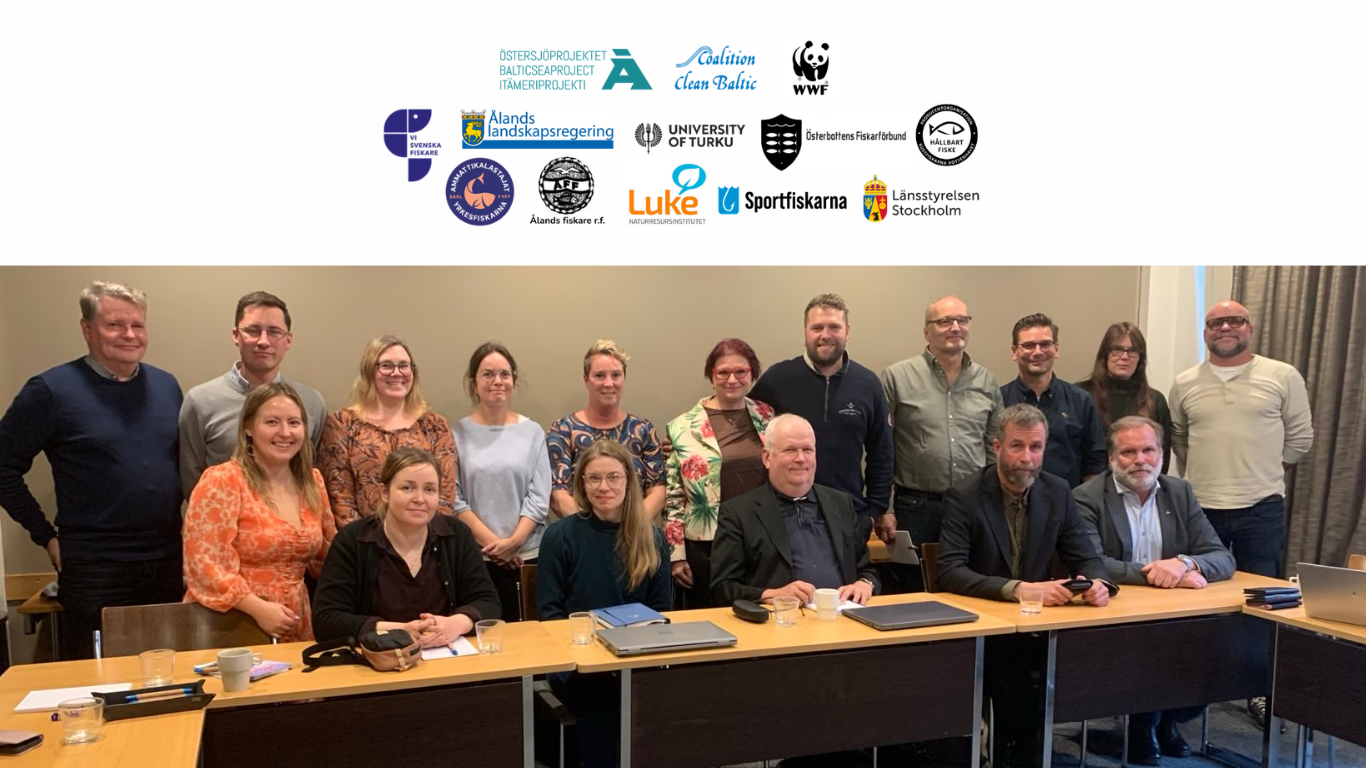
Within the framework of the Fisheries for the Future project, funded by Ålandsbanken’s Baltic Sea Project, Finnish and Swedish fishers, environmental organisations and researchers gathered last autumn to discuss the status of herring stocks and fishing in the Baltic Sea. Participants gained a better understanding of differences between countries and areas regarding stock status, fisheries management and research. The organisations that took part in the workshop all agree on the need for joint dialogue and wish for the cooperation to continue.
“The project combines research and practical understanding of the herring situation in the Baltic Sea. That makes the initiative particularly important, as the lessons learned can contribute to better decisions and more accurate measures going forward," notes Crista Hietala, Head of Marketing and Communications at Ålandsbanken and the Baltic Sea Project.
During the workshop, a shared understanding emerged of the complexity of the issue, where fishing is one factor but not the only cause of the state of the stocks. The need for a holistic approach was emphasised, in which environmental changes and factors affecting fisheries regulation are considered alongside fishing itself.
"Herring stocks are affected by a range of interacting factors – from water quality and salinity to changes in food webs and climate change. At the same time, knowledge about how these factors interact remains limited, which contributes to increased uncertainty in management," says Aimi Hamberg, Marine Policy Officer at Coalition Clean Baltic.
More stable quotas increase predictability
The predictability and economic sustainability of fishing can be improved by reducing annual variations in fishing quotas. Multi-annual and more stable quotas would facilitate the planning of fishing operations and better secure the herring's central role in the Baltic Sea ecosystem.
The fishing and environmental organisations that participated in the workshop propose that EU member states ask the International Council for the Exploration of the Sea (ICES) to investigate how the quota system can be developed in a more stable and long-term direction, while at the same time ensuring the recovery of sustainable herring stocks.
More knowledge about herring spawning areas
Workshop participants emphasise that a significantly better knowledge base is needed about herring spawning and nursery areas than what we have today. Updated information on the most important reproduction areas for herring is central to marine spatial planning, for example when siting offshore wind power and other uses of sea areas.
Towards ecosystem-based stock assessments
During the workshop, it was recommended that herring stock assessments should be based on an ecosystem perspective.
”We believe that stock assessments and advice on fishing quotas need to take greater account of changes in central ecosystem factors, such as predation by seals and cormorants. It is important to expand data collection in order to achieve this," say representatives of Vi Svenska Fiskare (We Swedish Fishers).
As a first step, workshop participants recommend that Finland and Sweden initiate a joint regional project in the Gulf of Bothnia, which can later be extended to other parts of the Baltic Sea.
Management areas should be reviewed – dialogue on protected areas needs to continue
The workshop highlighted the need to review the division of management areas in the Baltic Sea. Participants propose that the Bothnian Sea and the Bothnian Bay be separated as distinct regulatory areas. This is motivated by genetic differences between the stocks and the fish's migration patterns.
In addition, participants consider it important to continue the dialogue on possible protected areas in the Bothnian Sea. Such areas could be introduced as time-limited pilot trials, whose effects are evaluated scientifically. The dialogue on protected areas in the Bothnian Sea has continued between the organisations at a meeting held in February.
***
Related documents
Read the press release in
Swedish and in
Finnish.
Main outcomes of the workshop in Swedish and Finnish.
***
Further information
The Fisheries for the Future workshop was a collaborative project between the environmental organisation Coalition Clean Baltic (CCB) and WWF Finland, with funding from Ålandsbanken’s Baltic Sea Project.
Among the represented fishing organisations were Suomen Ammattikalastajaliitto/Finlands Yrkesfiskarförbund (Finnish Professional Fishers' Association), Österbottens Fiskarförbund (Ostrobothnia Fishers' Association), Vi Svenska Fiskare (We Swedish Fishers), Kustfiskarna Bottenhavet (Bothnian Sea Coastal Fishers), Ålands fiskare (Åland Fishers) and Sportfiskarna (the Swedish Anglers' Association). Fisheries management was represented by the Government of Åland and the County Administrative Board of Stockholm. In addition, experts from the Natural Resources Institute Finland, the University of Turku and the Swedish University of Agricultural Sciences participated.