CCB Annual Conference Baltic 2011 on Sustainable Coastal Development & CCB Extra Ordinary General Meeting, 6-8 May 2011, in Jurmala, Latvia

CCB • May 6, 2011

The CCB Annual Conference Baltic 2011 and CCB Extra Ordinary General Meeting was held in Jurmala, Latvia, between 6-8 May.

We now have the pleasure to invite you to Latvia for the CCB Baltic 2011 Conference and Extra Ordinary General Meeting!

This year the CCB Baltic Conference is organised together with Keep Latvia Tidy and Latvian Green Movement, in Jurmala, Latvia. The programme starts on Friday evening with registration and social event from 18.00 onwards and ends on Sunday afternoon with an excursion. An Extra Ordinary General Meeting will be held on Sunday morning.

On Friday there will be a separate conference on “Threats and Opportunities for Developing Tourism and Nature Protection” organised by Keep Latvia Tidy. Please note that this conference is not part of the CCB Baltic 2011 Conference. If you have a wide interest to participate, please contact Janis Matulis to find out more.

Sustainable Coastal Development in the Baltic Sea Region

is the theme for this year’s Conference. During the conference we will discuss different aspects of sustainable coastal development. The draft programme can be found below.

Extra Ordinary General Meeting

A CCB Extra Ordinary General Meeting will be held on Sunday morning due to the need for election of substituted ordinary and alternate Board members for some countries, from the 2-year election period 2010-2012.

Working Group Discussions on CCB Priority Areas

On Sunday before lunch there will be Working Groups about CCB priority sub-areas. The outcome of the discussions will be the base for the CCB Work programme 2012.

Poster Presentations

All participants are welcome to present their work connected to the theme of the Conference on a poster. Also posters presenting other implemented activities connected to CCB Priority Areas are welcome. If you plan to bring posters, please send in requests for exhibition space to the CCB Secretariat.

Language

The working language of the Conference will be English.

 Excursions

On Sunday afternoon there will be an excursion organised in cooperation with Environmental Protection Club of Latvia (VAK) . More information will follow.

 Conference Venue

The Conference will be held at “Baltic Beach Hotel” in Jurmala

(www.balticbeach.lv/en). Accommodation and meals are provided at the same location. Jurmala is situated on the Baltic coast 25 km west of Riga.

Expenses

No admittance fee is charged for the conference. However if you cancel less than ten days in advance you have to pay your own costs for meals and accommodation (approx 100 LVL) if no alternate is arranged.

For participants from CCB member organisations and associated partners, CCB will cover the costs for accommodation and meals.

 Travel Costs and Reimbursement

We urge member organisations to cover the travel expenses for their participants.

Participants from Ukraine and Belarus : The travel expenses will be covered from Sida-funding. Reimbursement will only be paid for the most non-expensive and convenient way of travelling.

Participants from Russia : There will be funding available for a limited number of participants from Russia .

Beyond that, there are very limited funds for reimbursement of travel costs for participants from Latvia , Lithuania , Estonia and Poland.

All reimbursement claims from all countries must be confirmed by the CCB secretariat!

No travel reimbursements will be made without confirmation given in advance! The travel costs will be reimbursed after the conference when you submit to the CCB secretariat a reimbursement form and all your original receipts of your travels.

Please note that you have to state your requested total amount for travel reimbursement ( SEK /EURO), local transport and potential Visa cost included, in the application form. To keep the budget-line for the Baltic 2011 conference, CCB can only guarantee that you will get the amount that you have stated in the application form.

When booking your travels please be aware of the CCB environmental travel policy that states that all journeys shorter than 400 km must be undertaken by bus or train. Air travel can only be considered if the distance is longer than 400km.

 Application

Fill in the registration form and send it by fax or e-mail to Sara Nilsson at the CCB International Secretariat (secretariat@ccb.se).Latest date: 12th of April There will be no reimbursements granted after the last day of registration (due to administrative constraints) so for those of you that want to apply for reimbursement it is essential to meet the deadline. Indicate in the form if you apply for reimbursement or not.

Please note that we only have room for a limited number of participants. We will confirm to all applicants on their possible participation in the Conference, so do not book your ticket before you have your participation confirmed by the CCB International Secretariat!

 Visa Application

For those of you who need Visa please contact Janis Matulis. Please send your passport data and home address as soon as possible, so that an invitation can be sent to you for Visa application. Usually, you will be best off with a “Schengen Visa”, which will normally take up to a month to be granted.
If you have any questions, do not hesitate to contact the CCB secretariat or Janis Matulis!

CONTACT INFORMATION
CCB Secretariat        E-mail: secretariat@ccb.se
Östra Agatan 53       Phone: +46 18 711 155
SE-753 22 UPPSALA     Fax: +46 18 711 175
SWEDEN

Janis Matulis
E-mail:janis.matulis@keeplatviatidy.lv
Phone: +371 2653 8871
Fax: +371 6322 3273
We wish you a warm welcome to Latvia! 
Keep Latvia Tidy, Latvian Green Movement and Coalition Clean Baltic

Presentations & related documents upon request.

Conference on “Threats and Opportunities for Developing Tourism and Nature Protection” organised by Keep Latvia Tidy on 6 May
Invitatation & agenda upon request.
By CCB June 2, 2026
About CCB Coalition Clean Baltic – CCB is a politically independent network, uniting 28 environmental non-profit organizations, as well as partners and experts from 11 countries surrounding the Baltic Sea. The main goal of CCB is to promote the protection and improvement of the environment and natural resources of the Baltic Sea region by encouraging new and constructive approaches and engaging people to become part of the solution instead of part of the problem. CCB Secretariat is based in Uppsala, Sweden. Background The HELCOM Baltic Sea Action Plan (BSAP) from 2021 includes a commitment to develop a regional action plan for habitat and biotope restoration by 2026. This plan is expected to: Define qualitative and quantitative restoration targets Establish a prioritized list of restoration actions Provide an implementation toolbox of best practices and methods The scope of the HELCOM action plan focuses exclusively on benthic habitats and biotopes , with particular emphasis on active restoration measures . Adoption of the plan is foreseen at the HELCOM Ministerial Meeting in November 2026. Coalition Clean Baltic (CCB) recognizes the importance of the HELCOM process but also the need to strengthen ambition, improve implementation guidance, consider a source-to-sea approach, and ensure long term ecological effectiveness . Therefore, a CCB Shadow Restoration Implementation Plan will complement and critically assess the HELCOM Restoration Action Plan. The purpose of the CCB Shadow Restoration Implementation Plan is to: Provide a science-based and practice-oriented complement to the HELCOM Restoration Action Plan Identify gaps, weaknesses, and missing elements in the HELCOM Restoration Action Plan Propose concrete, implementable actions, under a source-to-sea approach, to ensure effective restoration outcomes Strengthen alignment with the BSAP objectives and broader regional and EU policies Your Role You will compile the CCB Shadow Restoration Implementation Plan with aims to: 1. Assess the proposed HELCOM restoration measures , particularly their expected ecological impact by Reviewing proposed HELCOM actions for benthic habitats Evaluating whether actions are sufficient to achieve good environmental status Identifing missing measures, insufficient ambition, or unclear guidance 2. Define recommendations on how restoration should be implemented in practice including Required scale, intensity, and geographic coverage of actions Feasibility and effectiveness of active restoration methods 3. Propose additional actions and priorities , especially where the scope of the HELCOM action plan is insufficient, such as Integration of a source-to-sea approach for better ecological coherence Passive restoration measures Including actions on riverine systems (barrier removal, flow restoration) and coastal ecosystems (dunes, wetlands, lagoons) Incorporating important fish habitats and spawning/nursery areas, as well as ecosystem connectivity 4. Align HELCOM restoration efforts with other relevant policy frameworks , including the Baltic Sea Action Plan, Marine Action Plan, EU Biodiversity Strategy, Nature Restoration Regulation, Marine Strategy Framework Directive, Maritime Spatial Planning Directive, Water Framework Directive and Common Fisheries Policy. This is a Joint efforts with WWF Baltic Sea Programme The organisations, CCB and WWF Baltic Sea Program, will produce two separate documents with separate logos and will be presented at a joint side-event at the HELCOM Ministerial Meeting in November 2026. Actions for the Consultant/Expert & products to deliver The final document of the shadow restoration implementation plan Conduct interviews with all WA Leaders and MOs of CCB working on restoration to gather concrete input Share at the end all notes of the research and transcripts of interviews with MOs Bi-weekly call of consultant + CCB to check-in on progress, problems and next steps Publications/Sources CCB Restoration Guidelines https://irp.cdn-website.com/53007095/files/uploaded/CCB+Restoration+Guidelines_Update+October+2025.pdf CCB BSAP Shadow Plan: https://www.ccb.se/publication/Shadow%20Plan Profile A college degree, preferably in marine science, political science, environmental studies, social sciences, or a comparable field Experience in political campaigning, strategic communication, or advocacy, ideally in environmental, climate, nature, or marine conservation, preferably with an NGO Knowledge about relevant political settings and frameworks in the Baltic Sea (HELCOM, BSAP, MSFD, NRRL, ...) Experience in collaborating with coalitions, initiatives and civil society actors Initiative, independence and reliability working fully remotely Excellent written and spoken English are required Contract Terms Contract Type: can be structured as a consulting contract or a fixed-term employment (for candidates based in Sweden). We are open to discuss what works best depending on your situation. Time: From 15 June until 15 Oct 2026, at 50-75% work pace. Location: Remote position. Application Process: Should you be interested in applying for this position please send your CV (max. 2 pages) together with a personal letter (max. 1 page) before 9 June 2026 to: secretariat@ccb.se *** Being an international organization, CCB’s work is carried out in English. Applications submitted in any other language will not be considered. Incomplete applications (e.g. lacking either CV or personal letter) will be also not considered. We will be reviewing applications as they come in and encourage early applications. Only shortlisted candidates will be contacted. *** For inquiries , contact CCB Biodiversity Officer: andrea.cervantes@ccb.se Equal Opportunities CCB is an equal opportunity employer. In the application and hiring process, CCB will not discriminate against any individual based on race, colour, sex, language, religion, national or social origin, property, disability, age, family status, sexual orientation and gender identity, economic and social situation.
By CCB May 28, 2026
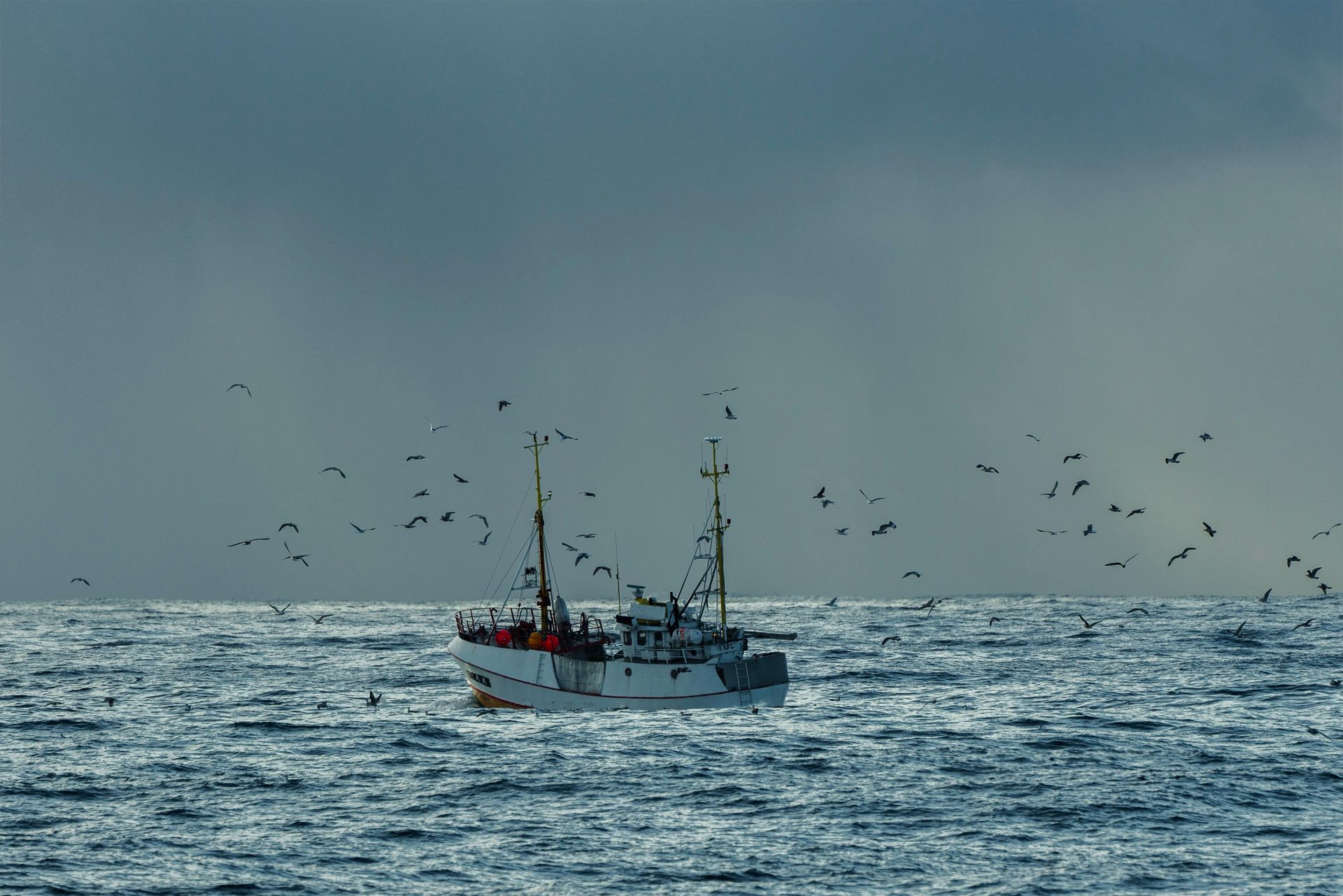
28 May 2026 - Baltic Sea herring stocks and the herring fisheries have in recent years become a central point of contention in Baltic Sea fisheries policy. Member States' approaches to the International Council for the Exploration of the Sea (ICES) recommendations for herring quotas have varied, and the public debate around herring is polarised. At the same time, dialogue between groups of fishers and other stakeholders in different countries has been limited, and not all actors have had a clear picture of each other's perspectives and needs. Within the framework of the Fisheries for the Future project, funded by Ålandsbanken’s Baltic Sea Project, Finnish and Swedish fishers, environmental organisations and researchers gathered last autumn to discuss the status of herring stocks and fishing in the Baltic Sea. Participants gained a better understanding of differences between countries and areas regarding stock status, fisheries management and research. The organisations that took part in the workshop all agree on the need for joint dialogue and wish for the cooperation to continue. “ The project combines research and practical understanding of the herring situation in the Baltic Sea. That makes the initiative particularly important, as the lessons learned can contribute to better decisions and more accurate measures going forward ," notes Crista Hietala, Head of Marketing and Communications at Ålandsbanken and the Baltic Sea Project. During the workshop, a shared understanding emerged of the complexity of the issue, where fishing is one factor but not the only cause of the state of the stocks. The need for a holistic approach was emphasised, in which environmental changes and factors affecting fisheries regulation are considered alongside fishing itself. " Herring stocks are affected by a range of interacting factors – from water quality and salinity to changes in food webs and climate change. At the same time, knowledge about how these factors interact remains limited, which contributes to increased uncertainty in management ," says Aimi Hamberg, Marine Policy Officer at Coalition Clean Baltic. More stable quotas increase predictability The predictability and economic sustainability of fishing can be improved by reducing annual variations in fishing quotas. Multi-annual and more stable quotas would facilitate the planning of fishing operations and better secure the herring's central role in the Baltic Sea ecosystem. The fishing and environmental organisations that participated in the workshop propose that EU member states ask the International Council for the Exploration of the Sea (ICES) to investigate how the quota system can be developed in a more stable and long-term direction, while at the same time ensuring the recovery of sustainable herring stocks. More knowledge about herring spawning areas Workshop participants emphasise that a significantly better knowledge base is needed about herring spawning and nursery areas than what we have today. Updated information on the most important reproduction areas for herring is central to marine spatial planning, for example when siting offshore wind power and other uses of sea areas. Towards ecosystem-based stock assessments During the workshop, it was recommended that herring stock assessments should be based on an ecosystem perspective. ” We believe that stock assessments and advice on fishing quotas need to take greater account of changes in central ecosystem factors, such as predation by seals and cormorants. It is important to expand data collection in order to achieve this ," say representatives of Vi Svenska Fiskare (We Swedish Fishers). As a first step, workshop participants recommend that Finland and Sweden initiate a joint regional project in the Gulf of Bothnia, which can later be extended to other parts of the Baltic Sea. Management areas should be reviewed – dialogue on protected areas needs to continue The workshop highlighted the need to review the division of management areas in the Baltic Sea. Participants propose that the Bothnian Sea and the Bothnian Bay be separated as distinct regulatory areas. This is motivated by genetic differences between the stocks and the fish's migration patterns. In addition, participants consider it important to continue the dialogue on possible protected areas in the Bothnian Sea. Such areas could be introduced as time-limited pilot trials, whose effects are evaluated scientifically. The dialogue on protected areas in the Bothnian Sea has continued between the organisations at a meeting held in February. *** Related documents Read the press release in Swedish and in Finnish . Main outcomes of the workshop in Swedish and Finnish. *** Further information The Fisheries for the Future workshop was a collaborative project between the environmental organisation Coalition Clean Baltic (CCB) and WWF Finland, with funding from Ålandsbanken’s Baltic Sea Project. Among the represented fishing organisations were Suomen Ammattikalastajaliitto/Finlands Yrkesfiskarförbund (Finnish Professional Fishers' Association), Österbottens Fiskarförbund (Ostrobothnia Fishers' Association), Vi Svenska Fiskare (We Swedish Fishers), Kustfiskarna Bottenhavet (Bothnian Sea Coastal Fishers), Ålands fiskare (Åland Fishers) and Sportfiskarna (the Swedish Anglers' Association). Fisheries management was represented by the Government of Åland and the County Administrative Board of Stockholm. In addition, experts from the Natural Resources Institute Finland, the University of Turku and the Swedish University of Agricultural Sciences participated.