Too many concessions in agreed eel fishing closures makes measure ineffective
The EU Fisheries Council have agreed to a roll-over of current eel fishing closures in EU waters to protect the 2026/2027 eel migrations. Regrettably the well-intentioned provision now contains so many derogations that the measure is not effective. The ban on recreational eel fishing in EU waters remain. In the Mediterranean region, measures apply in all waters, including freshwater, in line with the GFCM Recommendation [1] on eel.
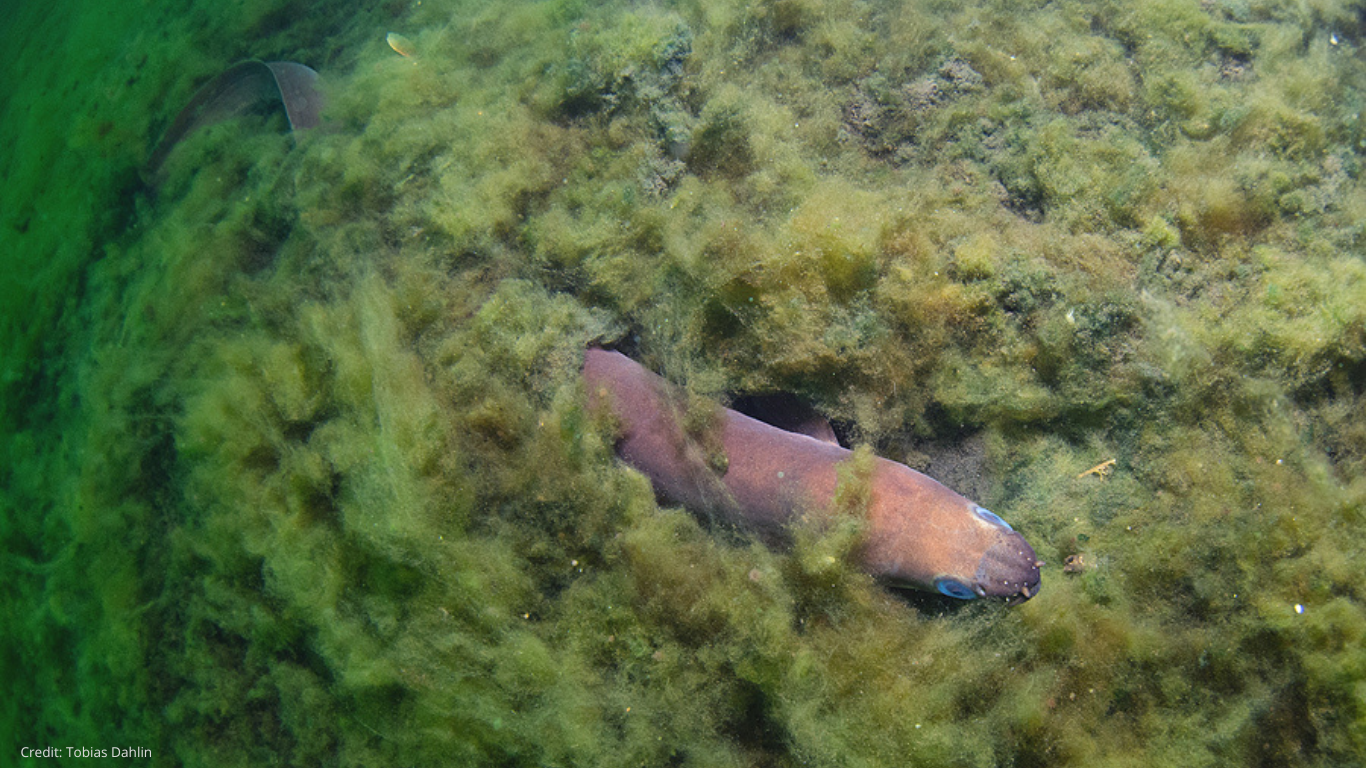
Stockholm, 15 December 2025 - In light of the lack of any significant signs of recovery in the critically endangered European eel population following the adoption of the EU Eel Regulation [2], the EU agreed in 2017 to introduce time-limited eel fishing closures to protect eel migration. These measures initially consisted of three-month closures aimed at preventing fishing of silver eels during their spawning migration to the Sargasso Sea.
Since then, the closures have been expanded to also cover the glass eel migration and complemented by a full ban on recreational fishing in EU waters. Their duration has also been extended to a total of six months (or three + three months). On paper, this represents a comprehensive conservation measure intended to support the reproduction and recruitment of one of the EU’s most depleted fish stocks. Today, less than 10% of the original eel population remains, and in the northern range, less than 1%.
However, the current version of the closures that will apply in the 2026/2027 eel fishing season is riddled with exemptions that undermine their conservation purpose. Under the regulation adopted by the Council, all Member States may permit 30 days of eel fishing during the main migration period under a derogation [3]. Fishing under the derogation can be allowed as 30 consecutive days, but also to be spread out on a day-by-day basis, enabling some Member States to tailor them to the existing fishing patterns and selectively allow fishing during conditions when eels tend to migrate, such as the moon cycle.
“Once again, scientific advice is being ignored, and fisheries of this critically endangered species are being allowed to continue. This is both alarming and deeply disappointing. We now appeal to all the Baltic Sea Member States to at least ensure that the mandatory EU fisheries closure period is regionally coordinated, does not include exemptions for fisheries during the peak migratory period, and is placed at a time when it genuinely protects the eel during its spawning migration”, comments Aimi Hamberg, Coalition Clean Baltic (CCB) Marine Policy Officer.
For commercial glass eel fisheries, on top of the 30 days there is a further derogation of 50 days of fishing provided that it is for the purpose of restocking, bringing the total number of potential fishing days during peak migration up to 80 days. Depending on how the derogations are used, this means that fishing can continue pretty much unabated throughout the peak migration, providing little protection for recruitment of new eels into European waters.
“This is of particular concern as the EU requirement for full traceability in the glass eel trade is not working. There is no overall system in place to ensure all the eels fished for restocking are actually used for restocking", says Niki Sporrong, Senior Policy Officer & European Eel Project Manager at FishSec.
Regionally, eel migration times may vary significantly with eels further away from the Sargasso Sea starting migration earlier. The provision therefore requires the Baltic Member States to coordinate their closures to “ensure an effective protection” of eels migrating from the Baltic Sea into the North Sea. Baltic Member States have failed to do this since 2023 when this was first introduced, resulting in a fall-back uniform closure from 15 September to 15 March – too late to provide effective protection in most Baltic Member States.
The eel fishing closures can also be tailored to the local fishing area – i.e. it doesn’t have to apply the same across the country – making it possible to tailor the exemptions from the closures to local fishing practices.
With European eel red listed as Critically Endangered since 2008, and scientific advice clearly stating that zero catch is the only precautionary option in line with the EU Common Fisheries Policy, the European Commission has tried to tailor the eel fishing closures to provide effective protection. This followed the failure to introduce a full fishing closure in 2018. As a result, closures have been extended to six months, and strengthened through wording like “prohibition”, “shall cover the month of peak migration”, “peak month for every geographical area”.
In its proposal for 2023, the Commission explicitly underlined the conservation purpose of this approach, stating: “A six-month closure, if set during the appropriate period, would cover the vast majority of migrating glass and silver eels and therefore provide a higher level of protection of the eel stock in the waters covered by the closure”.
“While well-intentioned, the eel fishing closures have in some countries become something similar to “paper parks. It looks good: six months without fishing to protect eels at key life stages. But push back from Member States has weakened the provision, shifting wording and time periods, inserting exemptions to a point where they are not effective, adds Niki Sporrong - With the right intention, you can still protect eel migration fully but what we see is that this is often not the case”.
The ban on recreational fisheries in marine waters remains in place. However, this partial protection does not meet the strong scientific advice calling for zero catches of all eel life stages in all habitats. After almost two decades of EU-wide recovery and conservation measures, there are no signs of population recovery. Only three EU countries – Ireland, Malta and Slovenia – have fully prohibited all fishing for the European eel, and total landings in 2024 remained over 2,000 tonnes.
_END
NOTES
[1] The GFCM (General Fisheries Commission for the Mediterranean) manages European eel through a multiannual plan.
[2] Council Regulation (EC) No 1100/2007 of 18 September 2007 establishing measures for the recovery of the stock of European eel.
[3] Art. 13.4 in the proposal COM (2025) 662.
For more information:
- Danish Presidency conclusions on December Council
- Council press release
- FishSec article on the proposals
- Mediterranean and Black Sea fishing opportunities
- Other Union waters fishing opportunities
- Recommendation GFCM/47/2024/1