COP30 brings ocean and water to the center of climate policy
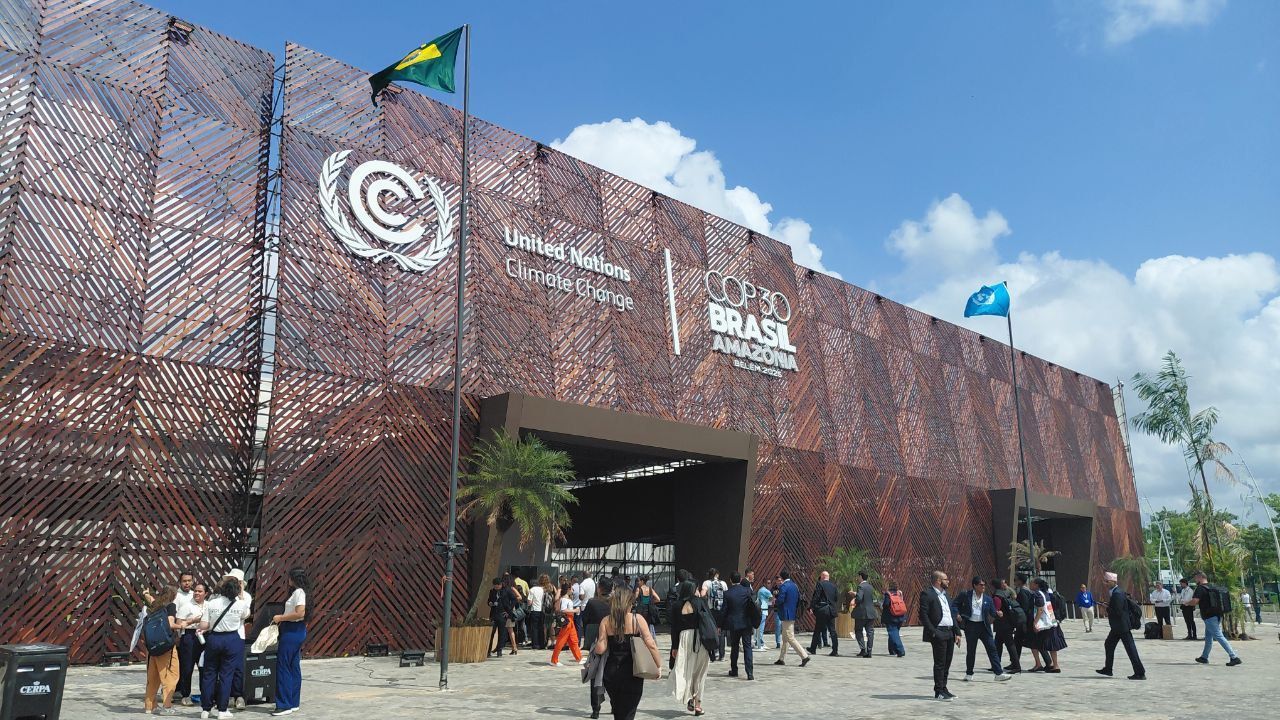
In Belém, in the heart of the Amazon, the 2025 UN Climate Change Conference COP30 immediately set the bar high. In his opening speech, Brazilian President Lula da Silva stressed that climate change is no longer a "threat to the future", but a tragedy that the world is already experiencing here and now, and called on countries to accelerate actions rather than limit themselves to promises.
However, as is often the case in COP meetings, the political reality turned out to be more complicated than ambitions. Negotiations were difficult: the countries could not agree on a clear and binding plan to phase out fossil fuels. It is important to note that
the Global Action Plan has provided a platform for discussing the development of a roadmap for phasing out fossil fuels, the main driver of climate change. At the same time, COP30 has brought tangible progress in other areas: the countries agreed to triple the amount of adaptation funding for developing countries by 2035, strengthened the forest and ocean agenda, and expanded the range of practical initiatives under
the Action Agenda. COP30 consolidated the trend: from "water at the center of the climate crisis" to a holistic ocean agenda closely related to energy, food, biodiversity and sustainable coastal development.
From the COP29 Water Declaration to the COP30 Enhanced Ocean Water Program
At COP29 in Baku, the Declaration on Water for Climate Action was adopted, with the aim to applying comprehensive approaches to combating the causes and consequences of climate change for water basins, emphasizing also the need to integrate water-related mitigation and adaptation measures into national climate policies, including Nationally Determined Contributions (NDCs) and National Adaptation Plans (NAPs).
COP30 did not reverse this logic, but expanded it towards the ocean and coasts. Both processes "aquatic" and "oceanic" are moving in the same direction:
- integration of water, coasts and ocean into the climate plans of countries;
- development of nature-based solutions;
- strengthening transboundary management of water and marine systems;
- recognizing adaptation as an equal part of climate policy, rather than an "adjunct" to emissions reduction.
Task Force on Oceans and the Blue NDC Challenge
The international
Task Force on Oceans, led by Brazil and France, was officially presented at the high-level ministerial meeting "From Ambition to Implementation: Delivering on Ocean Commitments" on 18 November, integrating oceans into a global mechanism to accelerate the incorporation of marine solutions into national climate plans.
The Blue Nationally Determined Contributions (NDC) Challenge encourages countries to set ocean protection targets when updating their NDCs. The goal is to transition the Blue NDC Challenge into an Implementation Task Force. Members of the Blue NDC Challenge, currently 17 countries, can adopt a broad set of actions aimed at the protection and sustainable use of the oceans.These measures include the sustainable management, conservation, and restoration of coastal and marine ecosystems, supported by tools such as marine spatial planning, integrated coastal zone management, and climate-aligned marine protected areas. Countries are also encouraged to support sustainable and climate-resilient fishing and aquaculture, ensuring ocean health and long-term food security.
Brazil has set a clear example: its updated NDC includes a separate chapter on the ocean and coastal zones. For the first time, the national climate plan (Plano Clima) until 2035 includes a thematic adaptation plan for these areas. Priorities include the completion of national Maritime Spatial Planning (MSP) by 2030 and major programs for the conservation and restoration of mangroves and coral reefs (ProManguezal, ProCoral).
Blue Package and «Ocean Breakthroughs»
The Blue Package, part of the COP30 Action Agenda, provides a roadmap for how countries can:
- Protect and restore coastal and marine ecosystems;
- Integrate marine solutions into climate mitigation and adaptation;
- Scale marine protected areas aligned with climate goals;
- Deploy tools such as marine spatial planning (MSP) and integrated coastal zone management.
This is the first time an Action Agenda includes a dedicated ocean implementation track. It builds on the Ocean Breakthroughs, which are science-based "breakthroughs" formulated up to 2030 in five interconnected sectors:
Marine Conservation: by 2030, investments of at least USD 72 billion secure the integrity of ocean ecosystems by protecting, restoring, and conserving at least 30% of the ocean for the benefit of people, climate, and nature;
Ocean Renewable Energy: by 2030, at least 380 GW of offshore capacity should be installed, while establishing targets and enabling measures for net-positive biodiversity outcomes. USD 10 billion in concessional finance is advocated for developing economies to reach its goal.
Shipping: by 2030, zero emission fuels make up at least 5%of international shipping fuels (aiming for 10%) and 15% of domestic shipping fuels. 450,000 seafarers need upskilling and retraining, and 30% of trade should move through climate adapting ports. The impact of international shipping on marine biodiversity should be reduced by 30%.
Aquatic Food: by 2030, at least USD 4 billion per year will support resilient aquatic food systems that contribute to healthy, regenerative ecosystems and sustain food,and nutrition security for three billion people;
Coastal Tourism: by 2030, USD 30 billion per year should be invested to halve emissions from coastal tourism. Additional investments are planned to build the resilience of local communities and to recover and protect ecosystems, supporting sustainable tourism in island and coastal destinations most vulnerable to climate change.
Practical tools for achieving these goals were also launched at COP30:
- Ocean Breakthroughs Implementation Dashboard is a public dashboard to monitor the progress of countries and industries in five areas (nature conservation, marine food, renewable energy, shipping, tourism);
- Marine Biodiversity & The Ocean Health toolkit is a set of standards and methodologies for assessing the state of the ocean and integrating ocean based solutions into NDC/NAP (including ocean health indicators, recommendations for monitoring biodiversity, and templates for accounting and reporting).
Together, these tools enhance accountability and transparency, making it more difficult for countries to "speak beautifully" about the ocean without taking measurable actions.
One Ocean Partnership and Belém Ocean Declaration
The One Ocean Partnership is another framework initiative reinforced at COP30. It unites states, scientific organizations, NGOs and businesses around large-scale programs for the restoration and protection of marine ecosystems. By 2030, the partnership aims to mobilize at least $20 billion for the restoration of marine ecosystems, create up to 20 million jobs in coastal regions, accelerate the implementation of ocean-based solutions in national climate policies.
The Belém Ocean Declaration
was presented at the Ocean Pavilion, calling on countries to:
- Recognize the ocean as a central climate regulator and integrate it into national and global climate strategies;
- Ensure accessibility and equity of ocean solutions, prioritizing small island states, least developed countries and coastal communities;
- Accelerate ocean and coastal conservation by linking itto mitigation, adaptation, and sustainability goals;
- Develop threat-monitoring technologies (e.g. sea level rise, acidification, biodiversity loss) and create reliable MRV (monitoring, reporting and verification) systems for ocean solutions;
- Support global ocean surveillance and mapping systems.
The declaration sets the political framework that underpins the practical goals and tools of the Blue Package and Ocean Breakthroughs.

At COP30, environmental organizations and scientific institutions also raised concerns about threats to the ocean that remain outside formal solutions. One of the key issues was deep-sea mining: NGOs warned about the risks of destroying unique deep-sea ecosystems and emphasized that commercial mining should not proceed without scientific data on its climatic and environmental consequences. Although COP30 did not make formal decisions on deep-sea mining or restrictions on commercial fishing, pressure from NGOs, scientists, and coastal communities is growing, shaping global demand for stronger ocean protection in future climate negotiations.
Strengths of the COP30 water and ocean agenda
- The ocean has been systematically integrated into climate instruments for the first time, including NDCs, the Action Agenda, and various coalitions and partnerships;
- The Blue Package and Ocean Breakthroughs set specific benchmarks for sectoral goals, financing, and monitoring;
- New financial and institutional mechanisms are emerging, such as the Blue NDC Challenge, One Ocean Partnership, and ocean-focused parts of the Action Agenda, supporting national and regional blue projects.
Gaps and challenges
- Most oceanic initiatives remain voluntary and are embedded in binding COP decisions;
- There is still no strong language in COP texts on limiting oil and gas production on the continental shelf or in deep-sea areas;
- Freshwater ecosystems (rivers, lakes, reservoirs) receive noticeably less attention than ocean and forests, leaving the water agenda somewhat "blurred" across forest, biodiversity, and Amazonian themes.
In summary, COP30 has significantly advanced the institutionalization of the ocean in climate policy, but has not addressed the key political issue of the rapid,mandatory phase-outof fossil fuels. Without this, any "blue" agenda risks being compensatory rather than transformational.
The COP30 water agenda reinforces the integration of seas and coasts intoclimate policy. For the Baltic States, this means coastal ecosystems will increasingly be included in national adaptation plans and climate strategies as natural protection against storms, erosion and sea level rise.
COP30 initiatives such as the Blue NDC Challenge, Blue Package, and One Ocean Partnership create the political and financial framework for scaling coastal ecosystem restoration projects. This opens opportunities for projects aimed at strengthening coastal resilience, monitoring sea conditions, and implementing nature-based solutions. As a result, the COP30 water agenda creates both pressure and incentives to accelerate climate adaptation in the Baltic and highlight the need for more funding for "blue" and coastal projects.
***
Article written by Anna Ushakova, CCB Maritime Working Area Leader